What Is Net Metering? How It Works for Rooftop Solar
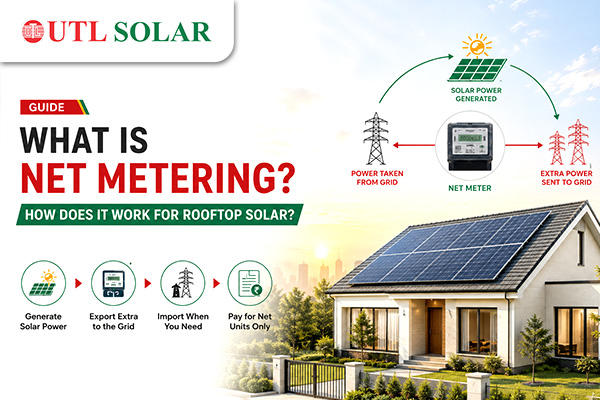
Learn what net metering is, how it works with rooftop solar, how exported units affect your electricity bill, and what to check before installation.
One of the biggest advantages of installing rooftop solar is that your panels can generate electricity during the day and reduce how much power you need from the grid. But what happens when your solar panels generate more electricity than your home is using?
That is where net metering comes in. Net metering allows the extra electricity produced by your rooftop solar system to be sent to the grid. At the same time, when your solar system is not producing enough electricity, you can draw power from the grid as usual.
A bidirectional meter records both sides of this electricity flow. In simple terms, net metering helps you get credit for the surplus solar electricity you export to the grid and can significantly reduce your electricity bill.
What Is Net Metering?
Net metering is a billing arrangement for grid-connected rooftop solar systems. It keeps track of two things:
- How much electricity you take from the grid
- How much surplus solar electricity you send back to the grid
At the end of the billing cycle, these units are adjusted according to the applicable net metering rules.
For example, suppose during one month:
- You import 400 units from the grid
- Your solar system exports 250 units to the grid
In a simple net metering example, your net grid consumption would be: 400 − 250 = 150 units
Your electricity bill is then calculated based on the applicable billing rules for those net units, along with any fixed charges or other applicable fees. This is what makes net metering so useful for rooftop solar owners. Electricity generated during the day does not necessarily go unused simply because your home does not need it at that moment.
How Does Net Metering Work?
The easiest way to understand net metering is to follow the electricity flow through a typical day.
Morning: Solar Generation Begins
Once sunlight reaches the solar panels, they start generating electricity. The electricity produced by your rooftop solar system is first used to run appliances in your home, such as fans, lights, refrigerators, televisions and other electrical loads.
Suppose your home is using 2 kW of power and your solar system is producing 2 kW at that moment. Most or all of your electricity requirement can be met directly by solar power.
Afternoon: Extra Solar Power Goes to the Grid
Solar generation is usually at its highest during the middle of the day. Imagine your solar system is generating 4 kW, but your home is only consuming 1.5 kW. The house uses the electricity it needs first.
The remaining solar power can then be exported to the electricity grid. Your net meter records these exported units.
Evening and Night: Power Comes From the Grid
Once the sun goes down, solar panels stop generating electricity. If your system does not have battery backup, your home begins drawing electricity from the grid. The same net meter also records how much electricity you import from the grid.
At the End of the Billing Cycle
Your meter has now recorded both:
Import: Electricity taken from the grid
Export: Solar electricity sent to the grid
These figures are then adjusted according to the net metering rules applicable in your state or DISCOM area. That is the basic working principle of net metering.
What Is the Difference Between a Normal Meter and a Net Meter?
A conventional electricity meter mainly records the electricity your home consumes from the grid. A rooftop solar system changes the situation because electricity can now flow in both directions.
You may take electricity from the grid at one time and send surplus solar electricity back to the grid at another. That is why a bidirectional meter , commonly called a net meter, is required.
A net meter separately records both directions of electricity flow:
Your electricity provider uses this import and export data to calculate your electricity bill according to the applicable net metering rules.
Net Metering Example
Suppose you have a 5kW rooftop solar system. Here is a simple example of how solar generation, direct consumption, grid export and grid import can work during one month.
Total electricity generated by the rooftop solar system during the month.
Solar electricity consumed directly by your home’s appliances.
Surplus solar electricity sent to the grid through the net meter.
Electricity taken from the grid during low-solar periods, evenings and night.
What Does the Net Meter Record?
Simple Net Metering Calculation
These figures are then adjusted according to the applicable net metering rules. This example also shows why total solar generation is not the only number that matters. You should also understand how much solar power your home consumes directly and how much is exported to the grid.
Can Net Metering Make Your Electricity Bill Zero?
It is possible for rooftop solar to reduce the energy portion of your electricity bill significantly, but you should not assume that net metering will always result in a completely zero bill.
Even when your solar generation covers most of your electricity usage, your final bill can still include fixed or regulatory charges.
Your electricity bill may also include:
- Fixed charges
- Meter charges
- Taxes
- Electricity duty
- Other charges applicable in your state
So even if your solar generation offsets most of your electricity consumption, some charges may still remain.
The better approach: Size your solar system according to your actual electricity consumption rather than simply trying to install the largest possible system.
What Are the Benefits of Net Metering?
Your Extra Solar Power Is Put to Use
Many homes consume less electricity during the daytime, especially when family members are away at work or school. At the same time, solar generation is usually strongest during these hours. With net metering, this surplus electricity can be exported to the grid instead of going unused.
It Helps Reduce Electricity Bills
The electricity you export is accounted for under the applicable billing mechanism. As a result, your effective electricity consumption from the grid can be reduced. This is one of the main reasons rooftop solar becomes financially attractive for homeowners.
You Do Not Necessarily Need a Battery
If your main goal is to reduce your electricity bill and you do not require backup during power cuts, an On-Grid Solar System can work without batteries. The system uses the grid for balancing electricity demand and supply. This also keeps the initial cost lower compared with a battery-based solar system.
It Makes Better Use of Daytime Solar Generation
Solar panels often produce the most electricity when household consumption is relatively low. Net metering helps make this excess generation financially useful by allowing it to be exported to the grid.
How Is Net Metering Connected to an On-Grid Solar System?
Net metering is most commonly associated with On-Grid Rooftop Solar Systems . Here is how the basic setup works:
Solar panels generate DC electricity. The solar inverter converts it into AC electricity that can be used by household appliances. Your home consumes the solar electricity it needs first. If there is extra electricity available, it is sent through the net meter to the grid.
When solar generation is lower than your home’s electricity requirement, the grid supplies the remaining power.
Does an On-Grid Solar System Work During a Power Cut?
This is one of the most common misunderstandings about rooftop solar. A standard On-Grid Solar System usually shuts down when the grid goes off.
It does this for safety reasons. Even if there is strong sunlight outside, a normal grid-connected inverter will stop supplying power when it detects a grid failure.
Important: Net metering does not automatically give you power backup. If you also need electricity during power cuts, you may need a suitable Hybrid Solar System with battery backup.
Net Metering vs Gross Metering vs Net Billing
These terms are often used together, but they do not mean the same thing.
Net Metering
Imported and exported electricity units are adjusted according to applicable rules.
Gross Metering
Solar generation is exported to the grid and compensated separately, while your electricity consumption is billed separately.
Net Billing
Imported electricity and exported solar electricity may be valued at different tariffs.
Important: The actual system available to you depends on the regulations followed by your state and electricity distribution company. This is why homeowners should check the current policy before finalising a rooftop solar system.
Are Net Metering Rules the Same Across India?
No. There is a national regulatory framework, but detailed net metering rules can vary between states. State Electricity Regulatory Commissions and DISCOMs may have different conditions related to:
- Maximum eligible solar system size
- Sanctioned load
- Net meter installation
- Treatment of surplus units
- Carry-forward of credits
- Settlement periods
- Application process
- Required documents
- Technical approvals
This is an important point because homeowners often read a net metering rule online and assume it applies everywhere. It may not. Before installing rooftop solar, always check the latest net metering rules applicable to your state and DISCOM.
How to Apply for Net Metering
The exact process differs between DISCOMs, but the overall journey usually looks like this.
Check Your Electricity Consumption
Start with your previous electricity bills. Look at your average monthly electricity consumption to understand how much solar capacity may be suitable for your home.
Decide the Right Solar System Size
The system should be planned according to:
- Electricity consumption
- Available rooftop space
- Sanctioned load
- Local solar generation conditions
- Applicable DISCOM rules
Avoid selecting the system size only because a neighbour or relative installed the same capacity.
Complete the DISCOM Application Process
For a grid-connected rooftop solar system, you may need approval from your local DISCOM. The exact process and documents vary depending on location.
Install the Rooftop Solar System
Once the required approvals are in place, the solar system is installed according to the applicable technical standards.
Inspection and Net Meter Installation
The installation may be inspected by the relevant authority or DISCOM. After the required checks are completed, the bidirectional meter is installed or the existing metering arrangement is changed as required.
System Commissioning
Once the rooftop solar system is approved and connected to the grid, your net meter begins recording electricity import and export.
Does the Solar Panel You Choose Matter for Net Metering?
Yes, although net metering itself is a billing mechanism, the overall rooftop solar system still has to meet applicable technical and regulatory requirements.
If you are installing solar under a government subsidy scheme, there may also be additional requirements related to the solar panels, equipment and vendor.
For example, depending on the scheme and current rules, you may need to check:
- ALMM eligibility
- DCR requirements
- Approved vendor requirements
- Technical specifications
- DISCOM approval
This is why the cheapest solar panel or inverter is not automatically the right choice for a net-metered rooftop solar system. The complete system must be suitable for grid connection and comply with applicable regulations.
Who Benefits the Most From Net Metering?
Net metering can be especially useful for homes where:
- Solar generation is high during the day
- Daytime electricity consumption is relatively low
- A significant amount of surplus solar electricity can be exported
- The primary goal is to reduce the electricity bill
- The grid supply is reasonably reliable
For example: Consider a family where everyone leaves home in the morning. The solar system continues generating electricity during the day, but household consumption may be very low.
Without a suitable export mechanism, much of that potential solar generation may not provide its full financial benefit. With net metering, surplus generation can be sent to the grid and accounted for in the electricity bill.
Common Net Metering Mistakes to Avoid
Net metering can make rooftop solar more useful, but a few common misunderstandings can lead to the wrong system size or unexpected results.
Assuming Every State Has the Same Rules
Net metering regulations can vary significantly. Always check the latest rules for your electricity connection before planning your rooftop solar system.
Oversizing the Solar System Without Checking Regulations
Installing a bigger solar system does not automatically mean better returns. Your sanctioned load, electricity consumption and local regulations should all be considered.
Assuming Solar Will Work During a Power Cut
A normal On-Grid Solar System usually shuts down when the grid fails. If backup is important, discuss a hybrid solar system with battery storage.
Ignoring Fixed Charges on the Electricity Bill
Net metering can reduce electricity consumption charges, but fixed and other applicable charges may still remain on your electricity bill.
Not Checking System Eligibility Before Installation
Make sure the panels, inverter, installer and other components meet the technical or scheme requirements applicable to your project.
Tip: Always verify the applicable DISCOM rules and system requirements before installing a net-metered rooftop solar system.
Final Takeaway
Net metering may sound technical, but the basic idea is simple. Your Solar System produces more electricity than you need → the extra power goes to the grid. Your Solar System produces less than you need → you take electricity from the grid. Your net meter records both. The electricity provider then calculates your bill according to the applicable net metering rules.
For homeowners planning an On-Grid Rooftop Solar System , net metering is one of the most important things to understand before installation. It can help you make better use of daytime solar generation, reduce dependence on grid electricity and improve the financial value of your rooftop solar investment.
Just remember that net metering rules are not identical across India. Before finalising your system, check the current policy of your state and DISCOM, understand how exported units are treated and choose your solar system size accordingly.
Net Metering FAQs
What is net metering in solar?
Net metering is a billing system that records the electricity you import from the grid and the surplus solar electricity you export back to it.
How does a net meter work?
A net meter is a bidirectional meter. It separately records electricity imported from the grid and electricity exported by your rooftop solar system.
Can net metering reduce my electricity bill?
Yes. Exported solar electricity can be adjusted according to applicable net metering rules, which can significantly reduce your electricity bill.
Can my electricity bill become zero after installing solar?
It may reduce substantially, but fixed charges, meter charges, taxes and other applicable charges can still remain.
Do I need a battery for net metering?
No. A standard On-Grid Solar System can work with net metering without a battery.
Will my rooftop solar work during a power cut?
A normal On-Grid Solar System usually shuts down during a grid failure. A suitable Hybrid Solar System with battery backup may be required if you need power during outages.
What is the difference between net metering and gross metering?
Under net metering, imported and exported electricity are adjusted according to applicable rules. Under gross metering, solar generation and electricity consumption are generally accounted for separately.
What happens to extra solar units exported to the grid?
Their adjustment, carry-forward or settlement depends on the rules followed by your state and DISCOM.
Are net metering rules the same throughout India?
No. Rules related to system size, settlement, billing and approvals can vary from one state or DISCOM to another.
Is net metering necessary for rooftop solar?
If you want to export surplus solar electricity to the grid and receive the applicable billing benefit, an approved grid-connected metering arrangement is required.
Related articles
Bihar Solar Subsidy 2026: ₹98,000 Subsidy on Rooftop Solar
Bihar Solar Subsidy 2026 explained: Get up to ₹98,000 combined subsidy under PM Surya Ghar and Bihar's new sta…
7 Common Solar Inverter Problems and How to Fix Them
Inverter not turning on, tripping, or making noise? Here are 7 common solar inverter problems in India, what c…
Bifacial vs Monofacial Solar Panels: Is the Extra Cost Worth It in India?
Bifacial panels generate power from both sides and cost more than standard panels. Here's when that extra cost…